


One of the biggest myths I run into is that you need 20% down to buy a home. I hear it all the time, and it stops people from even picking up the phone. The truth is a lot of buyers around here qualify to buy with a little down, and some qualify to buy with nothing down at all.
That’s not a gimmick. These are real, established loan programs, some backed by the federal government and some run by the state of California, built specifically to help working families become homeowners.
So let me walk you through the low- and no-down-payment options that actually apply here in Shasta County, who they’re for, and how to find out if you qualify. I’ll keep it straight, including the parts that have strings attached.
USDA Loans: Zero Down in Anderson, Shasta Lake, and Cottonwood
If you’re open to buying just outside the Redding core, this is often the single best-kept secret in our market.
USDA Rural Development loans are government-backed mortgages that let eligible buyers purchase with zero down payment. They were created to support homeownership in rural and smaller communities, and a huge share of our county qualifies. In fact, by most estimates about 98% of Shasta County is inside a USDA-eligible area. Towns like Anderson, Shasta Lake, and Cottonwood are commonly eligible, along with places like Palo Cedro and Millville.
Two things to know. First, eligibility is tied to the specific property address, not the town, so we always check the exact home on the USDA map before assuming anything, especially closer to the Redding city limits, where eligibility can stop. Second, USDA has household income limits based on how many people live in the home. Those limits update every year and vary by household size, so the right move is to have a lender pull the current Shasta County figure for your situation rather than guessing.
For a lot of first-time buyers in Anderson, Cottonwood, and Shasta Lake, a USDA loan is the difference between “someday” and “this year.”
CalHFA MyHome: Help With the Down Payment
Not buying in a USDA area, or don’t fit the income limits? You still have options through the California Housing Finance Agency, better known as CalHFA.
Their MyHome Assistance Program is a deferred-payment junior loan that helps cover your down payment or closing costs, worth up to 3.5% of the purchase price on an FHA loan, or up to 3% on a conventional loan. “Deferred payment” is the key phrase: you don’t make monthly payments on the MyHome loan. It sits quietly behind your main mortgage and gets repaid later, when you sell, refinance, or pay off the home.
To use it, you generally need to be a first-time buyer, live in the home as your primary residence, complete a homebuyer education course, and fall within CalHFA’s income and sales-price limits for the county. It pairs with an FHA or conventional first mortgage, so for a lot of buyers, MyHome is what shrinks the cash-to-close down to something manageable.
CalPLUS and ZIP: Help With Closing Costs
Here’s a piece people miss: the down payment isn’t the only cash you need. Closing costs can run thousands of dollars on their own.
CalHFA has an answer for that too. Their CalPLUS first mortgage can be paired with the Zero Interest Program (ZIP), a zero-interest, deferred loan used specifically for closing costs. Stack ZIP together with MyHome down payment help, and many buyers end up needing very little out of pocket beyond their earnest money deposit.
It’s worth saying plainly: these programs are meant to be combined. The art is in putting the right pieces together for your budget, and that’s exactly the kind of thing a good local lender does every day.
California Dream For All: The Big One, When It’s Open
You’ve probably heard about Dream For All, CalHFA’s shared appreciation program, because it makes headlines every time it opens.
Here’s how it works. Dream For All can provide down payment help of up to 20% of the purchase price, capped at $150,000, paired with its own conventional first mortgage. The catch is right there in the name “shared appreciation”: when you eventually sell or refinance, you repay the original amount plus a share of your home’s appreciation. It’s a real benefit, but it’s not free money, and it’s aimed at first-generation homebuyers (buyers whose parents haven’t owned a home).
The other catch is timing. Dream For All isn’t always open. In 2026, CalHFA made an estimated $150 to $200 million available and ran a short application window in late February that closed in mid-March. As of now the statewide portal is closed, and CalHFA hasn’t locked in the next round. Program funds and rules also change from cycle to cycle. If Dream For All interests you, the play is to get fully pre-approved and ready now, so you can move the moment a window opens. I keep an eye on this and can let you know.
How to Actually Find Out What You Qualify For
I know that’s a lot of acronyms, so here’s the honest shortcut: you don’t have to figure out which program fits on your own.
The first step is a conversation with a trusted local lender who works with CalHFA and USDA loans regularly. They’ll look at your income, your credit, the area you want to buy in, and tell you which of these you qualify for and how they stack together. It usually costs nothing to find out, and it’s the single most useful hour you can spend before you start touring homes.
From there, I can help you focus your search where these programs actually work, whether that’s a zero-down USDA home in Anderson or Cottonwood, or a CalHFA-assisted purchase closer to town. The goal is simple: get you into the right home without draining every dollar you’ve saved.
If you’ve been assuming homeownership is out of reach because of the down payment, let’s find out for sure. There’s a good chance you have more options than you think.
Reach out anytime: 530-953-1100 · jcreteam.com/contact · [email protected]
Sources: California Housing Finance Agency (CalHFA) — MyHome, CalPLUS/ZIP, and California Dream For All program pages and 2026 announcements; USDA Rural Development Single Family Housing Guaranteed Loan Program and eligibility resources for Shasta County. Program terms, funding, income limits, and eligibility change over time and by address, so confirm current details with CalHFA, USDA, and a qualified local lender.
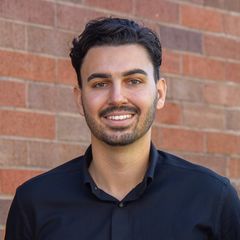
About Justin Cartwright — Justin Cartwright is a third-generation Shasta County resident and licensed REALTOR® with Waterman Real Estate in Redding, CA. He and the JCRE Team specialize in helping buyers and sellers navigate the Redding and greater Shasta County market with honest guidance and genuine care. DRE License #02093872 · Waterman Real Estate, 1760 Churn Creek Rd, Redding, CA 96002 · 530-953-1100.